Ravi Narain
Ravi Narain designed, implemented, and led programs and partnerships that reached more than 500,000 people, from schoolchildren and truck drivers to families experiencing homelessness, and has advised foundations and corporate philanthropy for years. He believes a small nonprofit or public agency should be able to learn how much its work helps with the same confidence as the largest foundations. He founded Prova to make that affordable, built the systems it uses to create its library and methods, and works on its engagements directly with foundations, nonprofits, and public agencies.
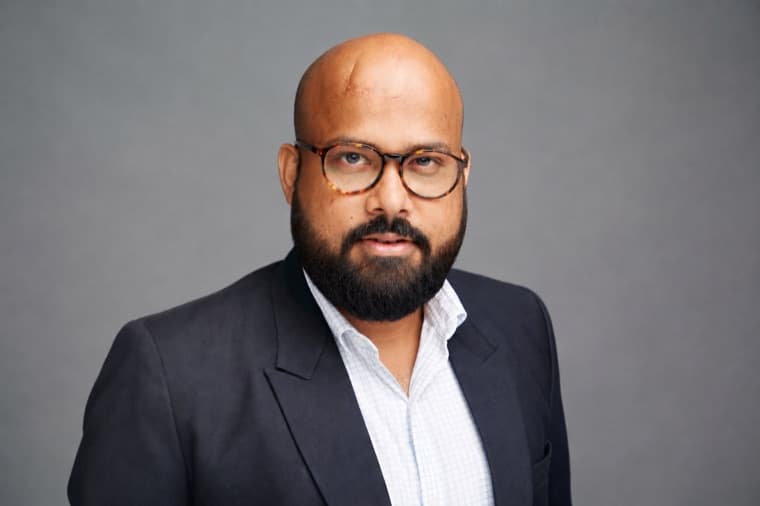
More than 17 years in philanthropy, corporate social responsibility, nonprofits, government, and capital markets.
Education
- Master of Public AdministrationSIPA, Columbia University, New York City
- Master of Public PolicyLee Kuan Yew School of Public Policy, National University of Singapore
- Bachelor of Management StudiesSt. Xavier's College, Mumbai
Ravi Narain began his career at 21, in capital markets in Mumbai, advising listed public corporations on how they communicated with shareholders, investors, and the press. For four years, he wrote the 150-page briefing book Ratan Tata used at Tata Chemicals' televised shareholder meetings, and he worked with the company's chief executive and chief financial officer on an investor strategy that increased its foreign institutional ownership by more than $100 million. Through the 2008 financial crisis, he was Bank of America's first point of media contact in India. In the same years, he co-founded a firm that served as implementation partner to nonprofit organizations in India working on safe drinking water access and anti-human trafficking work. The water programs reached more than 1.1 million people.
After studying public policy at Columbia University and the National University of Singapore, and as India brought in the world's first legislation requiring large companies to spend 2% of profits on social projects, Ravi co-founded Amana, an advisory firm in Mumbai that competed with Deloitte, EY, and KPMG to help companies turn that obligation into serious philanthropy. He led it for nine years. He built corporate foundations from a blank sheet, raised and directed money from banks, global companies, and family offices, and placed it with the nonprofits doing the work. In 2015, he argued in Quartz that this new money could fund the small experiments that governments cannot afford, and much of his work over those years was built on that idea. Private money could test and prove an idea, but reaching a whole population would still take government, so he built the evidence to be usable by policymakers from the start.
His programs ran through partners such as World Vision and Habitat for Humanity, across child health, road safety, homelessness, and the response to COVID. One child-health program, scaled from a pilot that had already worked, reached 400,000 children across ten states. He convened parties that rarely met at one table, from highway authorities to truckers' unions, and he built evidence where official data fell short. He asked outside evaluators, rather than his own team, to judge his programs. The findings of one small program shaped what its foundation funded next. He helped build a coalition of Mumbai nonprofit leaders and the foundations of India's first structured corporate alliance against human trafficking. He also served as a trustee of a nonprofit providing mental-health care to survivors of human trafficking, and on the board of a social enterprise fighting child malnutrition through fortified school lunches. Toward the end of this period, he advised Results for America on how US governments could deliver services on the evidence of what works.
He then joined the government of British Columbia, where he authored analysis and recommendations that advised the Premier, Cabinet, and Deputy Ministers on economic strategy. In his first week, he contributed to a successful Cabinet-level decision. Briefing materials he wrote supported federal engagement at the highest levels, including the Prime Minister's Office. He co-led monitoring and evaluation for one of the few subnational applications of Mariana Mazzucato's mission-oriented economics, and he co-designed the framework the government still uses to measure its decadal economic strategy. He worked on the province's $110 billion industrial blueprint. The reporting he set up for its long-term economic strategy kept running after he left.
Ravi founded Prova, which works to make measurement, evaluation, and learning affordable for nonprofits and state and local governments. At Prova, he conceived each collection in the library and set the questions its documents work through. He curated The Course, and he takes on Prova's engagements with foundations, nonprofits, and public agencies.